
Well, here we are! It’s April 2026, and the world of tax for sole traders and landlords has officially changed. If you’ve been following the news (or our previous blog posts), you’ll know that Making Tax Digital (MTD) for Income Tax Self Assessment (ITSA) is no longer a "coming soon" warning, it’s the current reality for many of us.
At SBS Essex Ltd, we know that for builders, plumbers, electricians, and tradespeople across the county, "tax talk" is usually at the bottom of the list of things you want to do after a long day on-site. But with these new rules in place, ignoring them can lead to some expensive headaches.
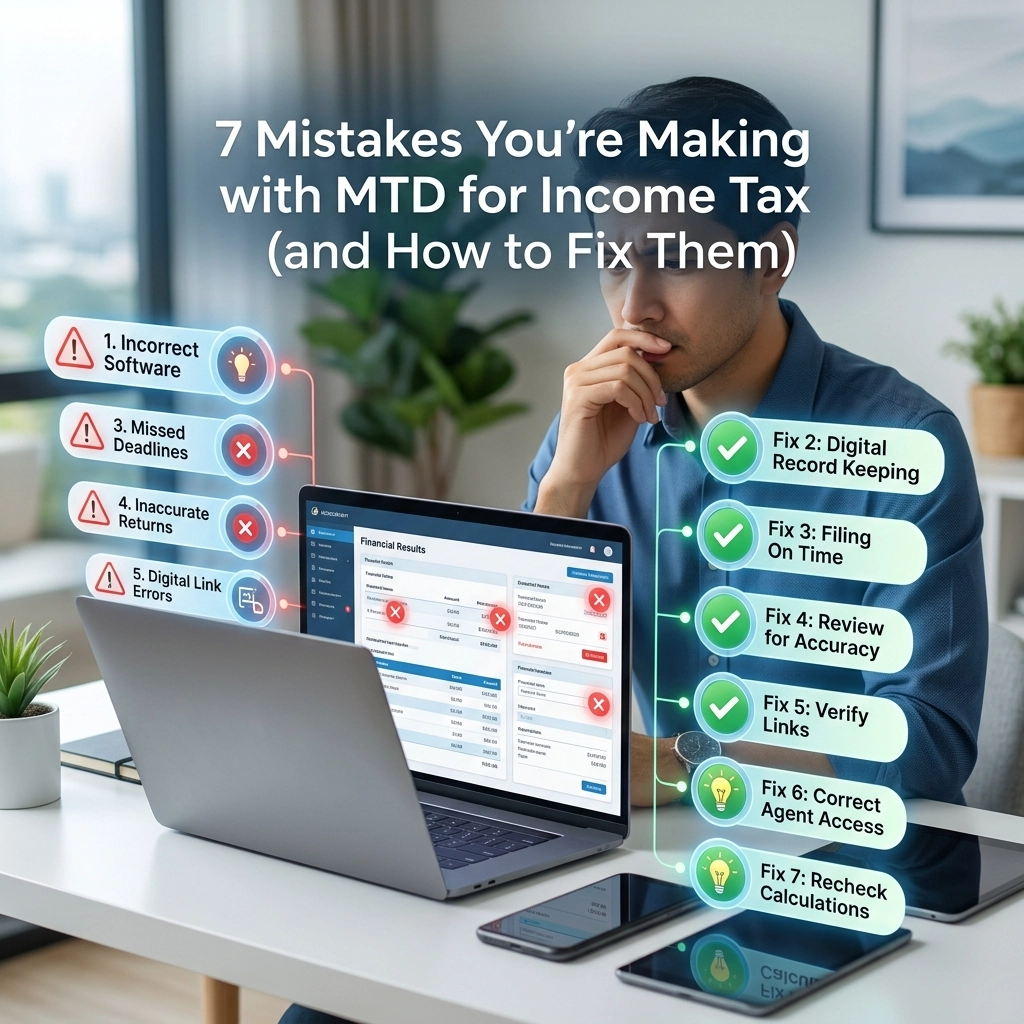
As an AAT Licensed Bookkeeping Practitioner, we’ve seen where people tend to trip up. To keep your business running smoothly and HMRC happy, we’ve rounded up the seven most common mistakes we’re seeing with MTD for Income Tax, along with some easy ways to fix them.
1. Thinking the Rules Don't Apply to You
One of the biggest misconceptions we hear is, "I’m just a one-man band, MTD is for big companies."
Actually, as of April 6th, 2026, MTD for Income Tax is mandatory for self-employed individuals and landlords with a qualifying income of more than £50,000. If you’re earning above that threshold, you’re in the first wave. If you’re between £30,000 and £50,000, your turn is coming in April 2027.
The Fix: Take five minutes to check your total turnover (not your profit, more on that in a second) from your last tax return. If it’s over £50,000, you need to be compliant right now. Don't wait for a letter that might arrive too late; being proactive is the best way to avoid "failure to notify" penalties.

2. Confusing Profit with Turnover
This is a classic trap for tradespeople. You might think, "Well, I turned over £55,000, but after I paid for my materials, van insurance, and tools, my profit was only £28,000. So I'm under the £50k limit, right?"
Unfortunately, no. HMRC looks at your gross income (turnover) before any expenses are taken off. If your total sales or rental income hits that £50,000 mark, you are legally required to follow MTD rules, regardless of what your final profit looks like.
The Fix: Look at your top-line figure. If your total invoices sent out (or rent collected) total more than £50k in a year, you need to get your digital systems in order. If you’re unsure how to calculate this, give us a shout: we can help you figure out exactly where you stand.
3. Relying on "Digital-ish" Records (Like Basic Spreadsheets)
We love a good spreadsheet as much as the next person, but for MTD, a standard Excel sheet usually won't cut it anymore unless it’s "bridged" with specific software. HMRC requires "digital links." This means your data must flow from your records to HMRC without you manually copying and pasting numbers or typing them into a website.
If you’re still writing your expenses in a notebook or typing them into a Word document at the end of the month, you aren't MTD compliant.
The Fix: Transition to HMRC-compatible accounting software like Xero or QuickBooks. These tools allow you to snap photos of receipts and log income on the go. Not only does this keep you compliant, but it also means you won't lose that crumpled fuel receipt in the footwell of the van.
4. Mixing Personal and Business Finances
We get it: when you’re busy, it’s easy to use your personal debit card for a quick run to the wholesalers or to pay a personal bill from the business account. However, MTD requires clear, digital records of business transactions. When your personal grocery shop is mixed in with your timber orders, the digital "trail" becomes a nightmare to untangle.
Mixing accounts makes your bookkeeping take twice as long and increases the risk of HMRC questioning your professional expenses.
The Fix: If you haven’t already, open a dedicated business bank account. Use it for every business transaction and only business transactions. Most modern accounting software can link directly to your bank feed, meaning your transactions are automatically imported. It makes MTD compliance a breeze and gives you a much clearer picture of how much money you actually have.

5. Treating Bookkeeping as a Yearly Event
Under the old Self Assessment system, many people would gather their receipts in January and spend a frantic weekend trying to file before the deadline. With MTD for Income Tax, that "once-a-year" approach is officially dead.
MTD requires quarterly updates. That means every three months, you have to send a summary of your income and expenses to HMRC. If you wait until the end of the year to start your bookkeeping, you’ll have missed three deadlines already.
The Fix: Set aside 30 minutes every Friday or one morning a month to update your records. Because you're using digital software, this is usually just a matter of checking that your bank transactions match your invoices. Staying on top of it means the quarterly update is just a click of a button rather than a week of stress.
6. Missing the New Quarterly Deadlines
This leads us to the next big mistake: missing the deadlines. The new MTD system comes with a points-based penalty regime. If you miss a quarterly update, you get a point. Once you hit a certain threshold of points, you get a financial penalty.
Because there are now four updates plus a final declaration, there are five chances every year to get it wrong if you aren't organised.
The Fix: Mark the deadlines in your calendar or, better yet, let your software (or your bookkeeper!) remind you. The quarterly periods are usually:
- 6 April to 5 July
- 6 July to 5 October
- 6 October to 5 January
- 6 January to 5 April
You have one month after the end of each period to submit your update.

7. Forgetting to Authorise Your Software
You’ve bought the software, you’ve linked your bank, and you’re feeling proud. But there’s one final hurdle: you have to actually tell HMRC that your software is allowed to talk to them. This is called "authorisation."
We’ve seen businesses record everything perfectly but fail to submit their updates because they didn't complete the "handshake" between their software and their Government Gateway account.
The Fix: Follow the setup wizard in your accounting software to the very end. It will usually redirect you to the HMRC website to log in and give permission. If you’re an SBS Essex Ltd client, we can often walk you through this or manage the link for you as your authorised agent.
Why a Professional Bookkeeper Makes the Difference
At SBS Essex Ltd, we know that your time is better spent on the tools or managing your team than worrying about digital links and quarterly submission windows.
As an AAT Licensed Bookkeeping Practitioner, we don't just "do the books." We provide the peace of mind that you’re fully compliant with the 2026 MTD rules. We can help you:
- Set up the right software: We’ll find the tool that fits your trade, not just the most expensive one.
- Clean up your records: We’ll help you separate personal from business and get your backlogs sorted.
- Handle the submissions: We can manage those quarterly updates for you, so you never have to worry about penalty points.
- Give you better advice: Because your books are updated every quarter, we can tell you exactly how much tax you should be putting aside, avoiding that nasty shock in January.
MTD for Income Tax might feel like a lot of extra "red tape," but with the right systems in place, it’s actually a great way to get more control over your business finances.
If you’re feeling a bit overwhelmed by the new 2026 requirements, or if you just want to make sure you aren't making any of these seven mistakes, let’s have a chat. We’re friendly, we talk your language, and we’re here to help Essex businesses thrive in the digital age.
Ready to get your MTD sorted? Get in touch with Claire and the team at SBS Essex Ltd today!