
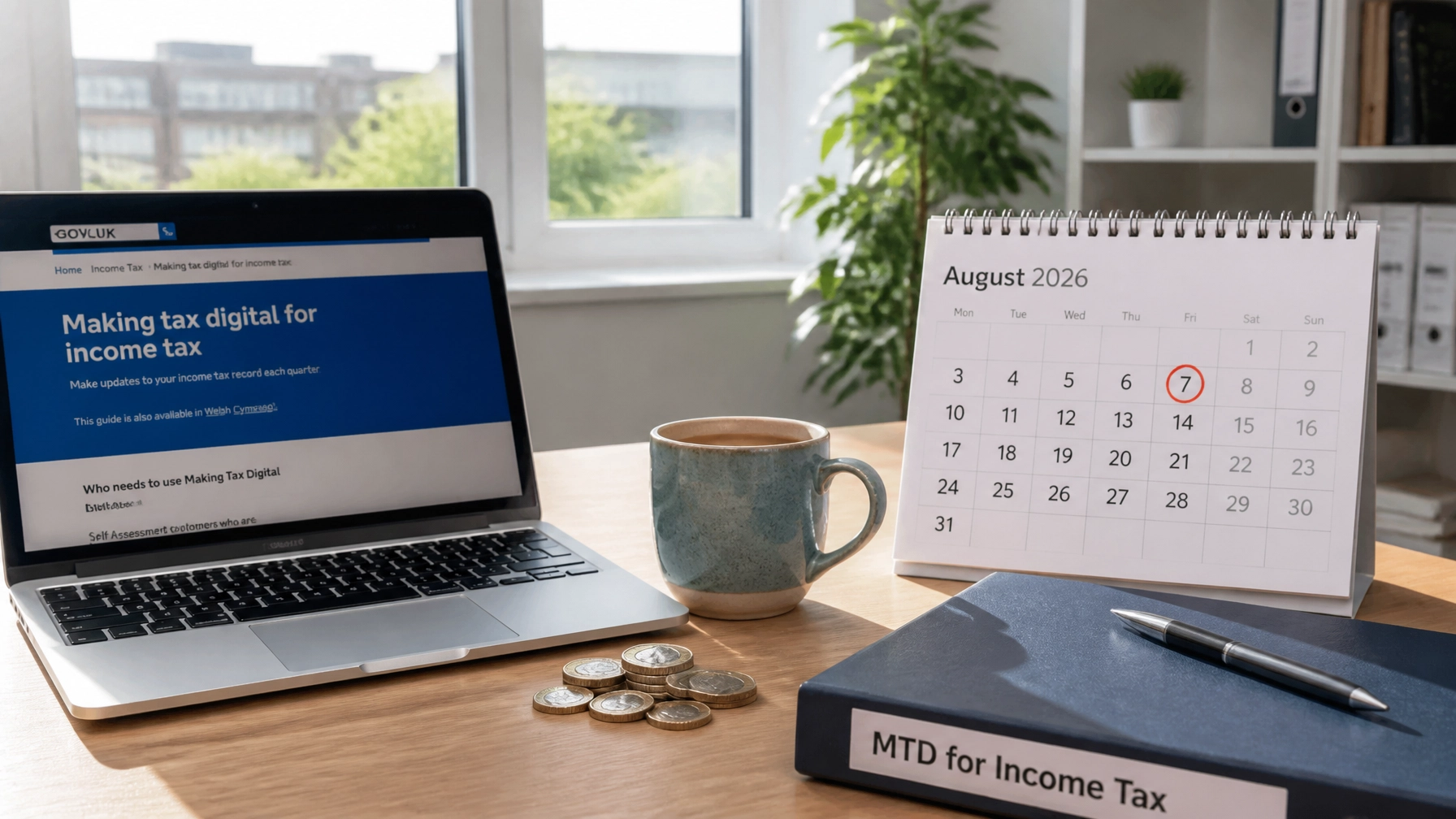
If you are a sole trader or a landlord in the UK, you have likely heard the whispers of "MTD" for quite some time. Making Tax Digital (MTD) has already transformed how VAT is handled, and now, it is arriving for Income Tax Self Assessment (ITSA).
I am Claire Murphy, and at SBS Essex, we have been helping businesses navigate the shifting sands of financial regulation for over 20 years. I know that "new government deadlines" usually trigger a bit of a headache, but I’m here to tell you that the upcoming 7 August 2026 deadline doesn't have to be a source of stress.
While it might feel like 2026 is a long way off, the reality of digital record-keeping means that the preparation needs to start much sooner than the deadline itself. Let’s break down exactly what is happening, who it affects, and why that August date is so significant.
What Exactly Is MTD for Income Tax?
For decades, the "tax season" for most small business owners meant a frantic scramble every January. You’d gather your receipts, tally up your spreadsheets, and submit one big Self Assessment return to HMRC.
Making Tax Digital for Income Tax Self Assessment (MTD ITSA) changes that. Instead of one annual event, business owners will now move to a system of quarterly updates. This means every three months, you will send a summary of your business income and expenses to HMRC using compatible software.
The goal is to provide a more real-time view of your tax position, helping you avoid that "nasty surprise" bill at the end of the year. However, it also means your bookkeeping needs to be more consistent than ever before.

The £50,000 Question: Does This Affect You?
The first wave of MTD for Income Tax officially begins on 6 April 2026. However, it doesn't apply to everyone all at once.
If your combined gross income from self-employment and property is over £50,000, you are in the first group.
It is important to note two things here:
- It is based on gross income (turnover): This is your total earnings before expenses. If you earn £55,000 but your expenses bring your profit down to £30,000, you are still required to join MTD because your gross income is over the threshold.
- It uses your 2024/25 tax return: HMRC will look at your tax return for the period ending April 2025 to determine if you meet the £50,000 threshold for the 2026 rollout.
If your income is between £30,000 and £50,000, you won't be mandated to join until April 2027. But for the "£50k club," the clock is already ticking.
Why 7 August 2026 Is the Date to Remember
Under the new rules, the first quarter of the 2026/27 tax year runs from 6 April to 5 July 2026.
HMRC requires your first quarterly update to be submitted within one month of the quarter-end. This makes 7 August 2026 the very first mandatory MTD for Income Tax deadline in UK history.

After that first submission, you’ll be on a regular cycle:
- Quarter 1 (Apr–July): Deadline 7 August
- Quarter 2 (July–Oct): Deadline 7 November
- Quarter 3 (Oct–Jan): Deadline 7 February
- Quarter 4 (Jan–Apr): Deadline 7 May
The "Soft Landing": Some Breathing Room
I promised this wouldn't be alarmist, and here is the good news: HMRC has acknowledged that this is a massive shift for small businesses. Because of this, they are introducing a "soft landing" period for the first year (2026/27).
Essentially, during this first year, HMRC will not apply penalty points for late quarterly updates. Usually, a late submission would earn you a point, and once you hit a certain threshold of points, you’d face a £200 fine. For the first year, those points won't be charged for the quarterly updates.
But a word of caution: This isn't a "get out of jail free" card. You are still legally required to keep digital records and submit your updates. The "Final Declaration" (the new version of the year-end return) still carries its usual deadlines and potential penalties. The soft landing is there to help you get used to the rhythm of quarterly reporting, not to excuse a total lack of participation.
Choosing Your Digital Tools
You cannot comply with MTD using a paper ledger or a basic manual spreadsheet. You must use "functional compatible software" that can communicate directly with HMRC’s systems.
At SBS Essex, we are firm believers in using the right tool for the job. We recommend three core platforms that are fully MTD-ready:
- Xero: Fantastic for business owners who want a beautiful, easy-to-use interface and excellent automation.
- Sage: A powerhouse for those who need robust reporting and have been used to traditional accounting structures.
- FreeAgent: Often the perfect fit for simple sole trader setups or freelancers, particularly as it is often free with certain business bank accounts.
Moving to these platforms isn't just about "pleasing HMRC." Digital bookkeeping allows you to see your cash flow in real-time, snap photos of receipts so you don't lose them, and automate your bank reconciliations.

How to Prepare Now (Without the Stress)
If you think you'll be in that £50k+ bracket, here is what I recommend doing over the next few months:
- Review your turnover: Look at your figures for the 2024/25 tax year. If you’re over £50,000, start planning now.
- Go Digital Today: Don't wait until April 2026 to start using software. If you move to Xero or Sage now, you’ll have over a year to get comfortable with the system before the first deadline hits.
- Separate Your Finances: If you haven't already, ensure you have a dedicated business bank account. It makes digital record-keeping ten times easier.
- Clean Up Your Books: If your current records are a bit "shoebox-heavy," now is the time to get them into a clean, digital format.
Why Expert Support Matters
While MTD is designed to be "simpler" in the long run, the transition can be daunting. As an AAT Licenced Bookkeeping Practitioner, I’ve seen how much peace of mind a business owner gets when they know their books are being handled by a professional.
Investing in outsourced bookkeeping UK services isn't just an expense; it’s a way to reclaim your time. Instead of spending your Sunday evenings trying to figure out why your bank balance doesn't match your spreadsheet, you can focus on growing your business or spending time with your family.

Final Thoughts
The 7 August 2026 deadline is a milestone, but it doesn't have to be a millstone. By moving to digital software like Xero or FreeAgent early and taking advantage of the "soft landing" year to find your feet, you can stay ahead of the curve.
If you’re feeling unsure about whether you’re ready for MTD for Income Tax, or if you're looking for bookkeeping services for small business that take the jargon out of the equation, we are here to help. At SBS Essex Ltd, we pride ourselves on being reliable, accurate, and ethical. We offer a free 1-hour discovery consultation to help you understand exactly what your business needs to stay compliant and thrive.
Feel free to reach out to us at www.sbsessex.co.uk to book your chat. Let’s get your finances moving in the right direction, long before August 2026 arrives.